Navigating the enterprise landscape requires more than just integrating standard APIs as businesses move away from basic automated text generators and generic bots. The demand has shifted dramatically toward autonomous agentic architectures, proprietary model fine-tuning the production-grade systems that yield quantifiable returns.
Implementing custom artificial intelligence is no longer a futuristic experiment and it is an urgent operational necessity to handle unstructured data, secure machine learning pipelines. Optimize complex supply chains. However, engineering these systems introduces massive technical friction, including data drift, model hallucinations, complex Retrieval-Augmented Generation (RAG) setups, and strict compliance demands like the EU AI Act or HIPAA.
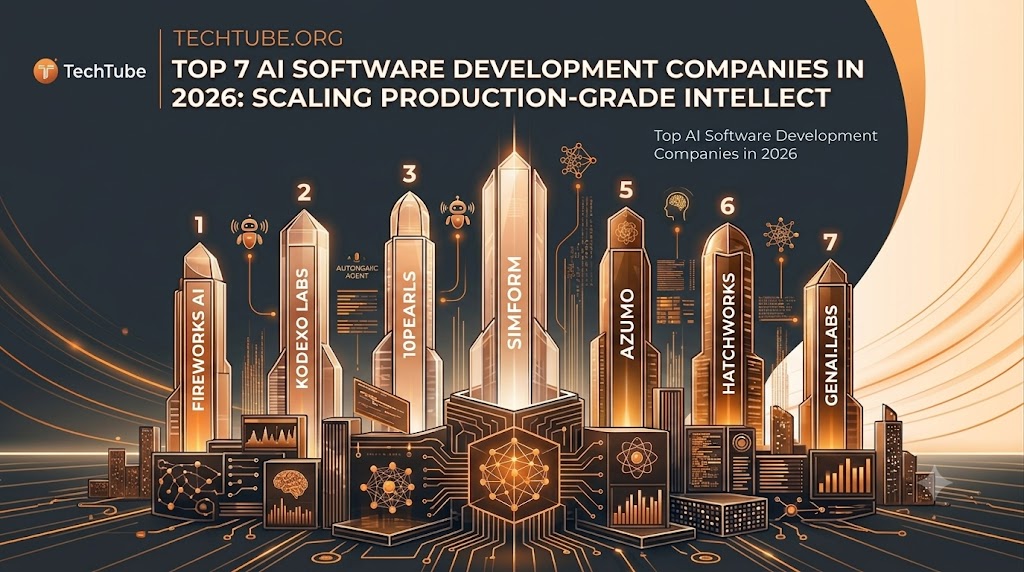
To overcome these challenges and build truly intelligent, resilient digital products, partnering with a specialized engineering firm is essential. The following evaluation highlights the top 7 AI software development companies leading the industry in 2026.
Takeways:
Here are the key takeaways summarized in concise, single-line points:
- Production-Grade Focus: Enterprise AI has evolved from basic API wrappers into autonomous, agentic architectures built for measurable ROI.
- Speed & Cost Control: High-performance infrastructure and optimized inference speeds are critical to keeping operational costs sustainable.
- Commercial Readiness: Partnering with firms that build their own software ensures battle-tested MLOps and long-term system stability.
- Strict Data Security: Modern AI deployment requires isolated cloud environments and rigorous governance to meet strict global compliance standards.
- IP Ownership: Fine-tuning open-weight models eliminates vendor lock-in and gives businesses full control over their intellectual property.
- End-to-End Engineering: Success requires combining backend machine learning with scalable cloud architecture and seamless user design.
1. Fireworks AI: The High-Performance Infrastructure Pioneer
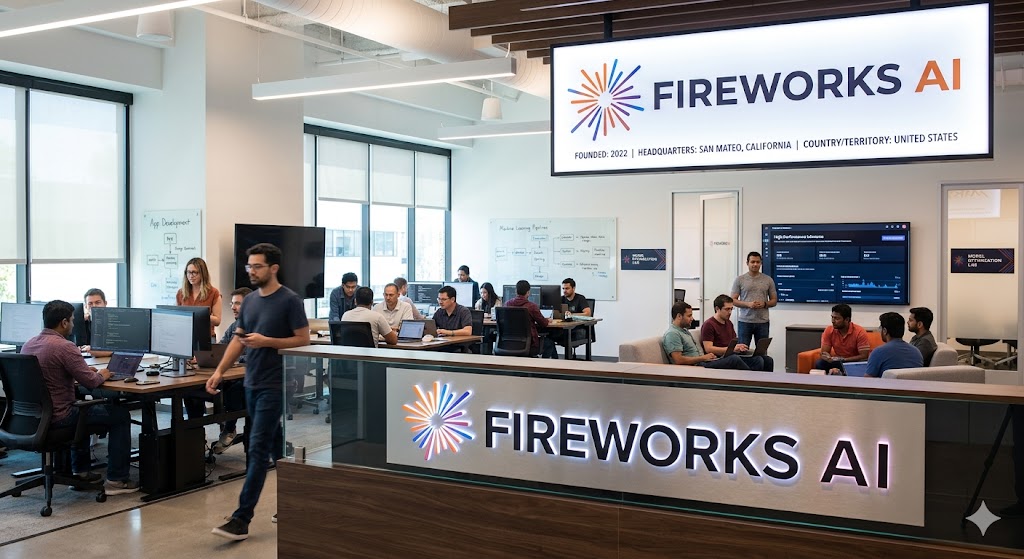
When latency, inference speed, and cost-effective model deployment are the primary bottlenecks, Fireworks AI stands out as an industry benchmark. They provide the foundational framework required to serve deep learning models at production scale.
Company Profile:
- Industry: App development software
- Founded: 2022
- Headquarters: San Mateo, California
- Country/Territory: United States
- CEO: Lin Qiao
- Employees: 125
Fireworks AI focuses heavily on optimizing the developer experience, enabling engineering teams to fine-tune and deploy compound AI systems with minimal friction. Their platform allows organizations to run massive open-weight models with blazing-fast token throughput, making them an essential partner for companies building real-time conversational agents, multimodal workflows, and high-frequency data synthesis platforms. By bridging the gap between raw hardware capabilities and custom software applications, they have secured a vital position on the global techtube radar.
2. Kodexo Labs: The Production-Grade Agentic Innovators
Unlike traditional agencies that only consult or build basic prototypes, Kodexo Labs has established a stellar reputation for delivering battle-tested, commercial-ready AI systems. They differentiate themselves by actively developing, launching, and scaling their own successful internal software products, giving them practical insights into MLOps and infrastructure stability.
Company Profile:
- Industry: AI & Custom Software Development
- Founded: 2021
- Headquarters: Austin, Texas
- Country/Territory: United States
- Leadership: PhD-Level AI Leadership
- Employees: 60+ Engineers (Team size approx. 50-200)
- Best For: Agentic AI architectures, automated workflows, and production-grade software engineering.
- Core Strengths: Custom large language model (LLM) fine-tuning, robust RAG pipelines, and complex data engineering.
Kodexo Labs excels at transforming ambiguous business problems into functional, automated solutions. Their engineering squads focus on building autonomous agents capable of executing multi-step workflows without constant human intervention. For enterprise clients aiming to extract value from massive, unstructured datasets while keeping operational friction low, their hands-on development methodology ensures code equity, security, and measurable business outcomes.
3. 10Pearls: Human-Centered Immersive AI Engineering
For global brands requiring a blend of advanced machine learning and world-class user experience (UX) design, 10Pearls is a dominant force. They specialize in embedding predictive intelligence directly into intuitive mobile platforms and enterprise web portals.
Company Profile:
- Industry: Info Technology, AI & Digital Engineering
- Founded: 2004
- Headquarters: Vienna, Virginia
- Country/Territory: United States
- CEO: Imran Aftab
- Employees: 1,400+
- Best For: Scalable product design, natural language processing (NLP), and cognitive application development.
- Core Strengths: Conversational AI, computer vision systems, and secure cloud-native architecture.
10Pearls takes a holistic approach to digital transformation. They ensure that background machine learning models integrate seamlessly with front-end applications, focusing heavily on data governance and system reliability. Whether it is deploying computer vision for predictive maintenance or configuring multi-tenant cloud ecosystems, they accelerate development cycles while maintaining strict performance metrics across complex software portfolios.
4. Simform: Enterprise-Scale Digital Transformation
Simform is widely recognized for its ability to handle massive, high-compliance software engineering projects. They provide dedicated development teams that specialize in scaling AI workloads across hybrid cloud infrastructures.
Company Profile:
- Industry: Custom Software & Cloud Engineering
- Founded: 2010
- Headquarters: Orlando, Florida
- Country/Territory: United States
- CEO: Rajan Patel
- Employees: 1,000+
- Best For: Large-scale enterprise systems and cloud-native machine learning operations.
- Core Strengths: AWS/Azure/GCP integration, MLOps orchestration, and data pipeline modernization.
Simform eliminates the classic architectural bottleneck where AI models fail to scale smoothly in live production environments. Their engineers design highly modular, resilient backends that can process terabytes of data while keeping API response times incredibly low. This technical precision makes them a preferred partner for Fortune 500 companies looking to modernize legacy systems with smart automation layers.
5. Azumo: Scalable Data Pipelines and Custom AI Applications
Operating with deep engineering expertise since 2016, Azumo builds intelligent software solutions designed to tackle complex data challenges. They focus on custom machine learning development that integrates deeply with a client’s core business logic.
Company Profile:
- Industry: AI Development & Data Science Services
- Founded: 2016
- Headquarters: San Francisco, California
- Country/Territory: United States
- CEO: Paul Friesen
- Employees: 150+
- Best For: Intelligent web and mobile applications, predictive modeling, and data science consultancy.
- Core Strengths: Text analytics, cognitive search implementations, and custom API development.
Azumo’s development framework centers on transparency and clean code management. They excel at building tailored data pipelines that clean, structure, and feed information into predictive algorithms. This allows businesses in financial services, healthcare, and logistics to automate decision-making processes, reduce manual overhead, and discover hidden patterns within their historical data.
6. HatchWorks AI: Strategic Implementation & Compliance-First Architecture
HatchWorks AI successfully merges strategic technology consulting with nearshore software execution. They design solutions with a strong emphasis on data privacy, safety, and regulatory compliance.
Company Profile:
- Industry: Nearshore Software & Generative AI Solutions
- Founded: 2016
- Headquarters: Atlanta, Georgia
- Country/Territory: United States
- CEO: Brandon Powell
- Employees: 300+
- Best For: Secure enterprise automation and nearshore software engineering.
- Core Strengths: AI governance, risk mitigation frameworks, and business intelligence dashboards.
HatchWorks AI is particularly effective for organizations operating in heavily regulated spaces, such as fintech and healthcare. They implement strict data lineage protections, ensuring that fine-tuned models do not leak sensitive corporate information or run afoul of regional privacy acts. Their clear, step-by-step development process gives executives complete control over algorithm auditing, model bias checking, and intellectual property.
7. GenAI.Labs USA: Specialised Generative Workflows
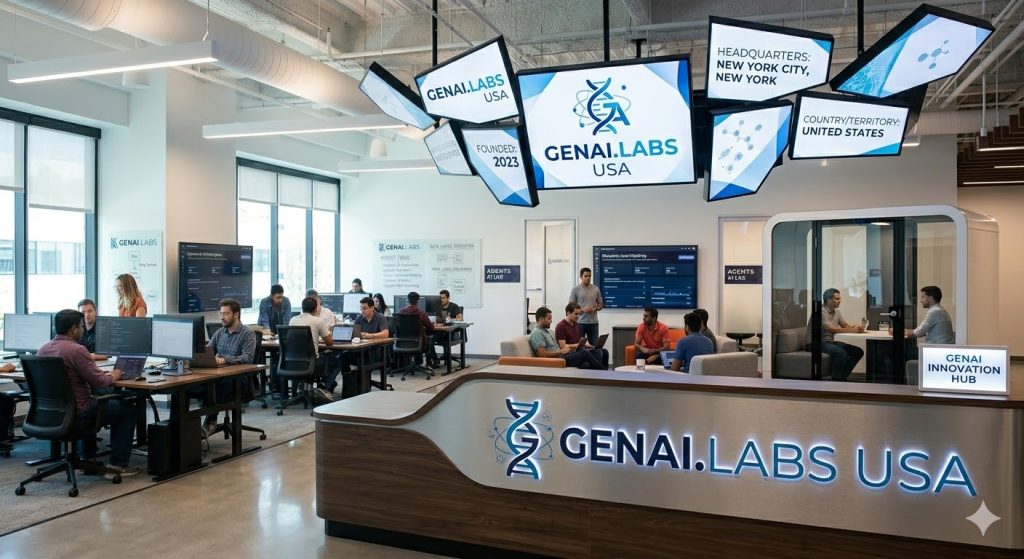
GenAI.Labs USA focuses explicitly on cutting-edge generative technologies and autonomous system creation. They help early-stage innovators and corporate laboratories deploy custom generative tools tailored to specific industry niche requirements.
Company Profile: GenAI.Labs USA
- Industry: Generative AI Workflows & Automation
- Founded: 2023
- Headquarters: New York City, New York
- Country/Territory: United States
- Leadership: Executive Team Lead
- Employees: 50+
- Best For: Next-generation generative workflows and cognitive automation.
- Core Strengths: Small language model (SLM) optimization, edge AI processing, and prompt engineering frameworks.
By optimizing models to run efficiently on specialized hardware or localized edge networks, GenAI.Labs USA minimizes the massive cloud computing bills often associated with generative software. They construct intelligent workflow systems that allow distinct AI agents to collaborate dynamically, opening up brand-new possibilities for automated software testing, complex document analysis, and highly personalized customer journeys.
Choosing the Right AI Development Partner
Selecting an engineering partner requires aligning your internal data maturity with a vendor’s specific technical expertise. To ensure project success, organizations should evaluate candidates across several key areas:
| Evaluation Criteria | Key Indicators | Target Objective |
| Architectural Flexibility | Support for open-weight models, hybrid cloud, and edge deployment. | Avoid vendor lock-in and high API fees. |
| Data Lineage & Security | SOC 2, HIPAA, GDPR compliance, and isolated model environments. | Total protection of proprietary data. |
| MLOps Maturity | Automated model monitoring, data drift alerts, and seamless retraining. | Long-term performance stability. |
| Commercial Experience | A proven track record of shipping proprietary, revenue-generating products. | Practical, production-grade code. |
By prioritizing deep engineering experience, rigorous data security protocols, and scalable MLOps frameworks over surface-level marketing promises, businesses can successfully navigate technical complexities. Partnering with a top-tier AI software development firm allows you to confidently build secure, production-grade applications that drive true operational transformation.
Final Words
The era of treating AI as a mere novelty or a superficial layer is officially over. As we navigate 2026, the businesses that thrive are those anchoring their operations in production-grade intellect, autonomous workflows, and uncompromising data security.
Choosing the right development partner from this elite lineup isn’t just about outsourcing code; it is about securing a competitive asset, protecting your intellectual property, and building a scalable digital foundation that evolves alongside artificial intelligence. The future belongs to the architecturally agile it’s time to choose your partner and start building.
Frequently Asked Questions
1. What does an AI software development company actually do?
An AI software development company designs, builds, and deploys custom applications powered by machine learning algorithms. Unlike traditional software development, their work focuses heavily on data engineering, large language model (LLM) fine-tuning, building robust Retrieval-Augmented Generation (RAG) pipelines, and setting up autonomous agentic architectures. They help businesses transition from manual workflows to automated, data-driven systems.
2. How much does it cost to build custom AI software in 2026?
The cost varies drastically based on complexity, data scale, and deployment requirements. A proof-of-concept (PoC) or basic MVP (Minimum Viable Product) might range between $30,000 to $75,000. However, a production-grade, enterprise-scale AI system featuring custom model training, strict security compliance, and complex data pipelines typically ranges from $100,000 to over $500,000.
3. How do these companies protect our proprietary business data?
Top-tier AI development firms implement strict data governance and security frameworks. This includes isolating your data inside secure virtual private clouds (VPCs), ensuring SOC 2 Type II, HIPAA, or GDPR compliance, and setting up localized or open-weight models so your enterprise data is never used to train public models. Always verify that your partner signs a comprehensive Non-Disclosure Agreement (NDA) and Intellectual Property (IP) assignment before sharing data.
4. What is the difference between utilizing an AI API and custom AI development?
Using a public API (like OpenAI or Anthropic) is fast and cost-effective for generic tasks, but it lacks deep contextual knowledge of your specific business and can lead to high recurring operational fees at scale. Custom AI development involves tailoring open-weight models, building specialized data workflows, and creating proprietary code. This reduces long-term inference costs, eliminates vendor lock-in, and gives your business full ownership of its digital assets.
5. How long does it take to develop and deploy a custom AI solution?
A standard timeline for a custom AI project looks like this:
- Discovery & Data Assessment: 2–4 weeks
- Prototype / MVP Development: 6–12 weeks
- Production Engineering & Testing: 8–16 weeks
- Deployment & MLOps Optimization: 2–4 weeks
On average, businesses should expect a timeline of 4 to 9 months to move from a raw concept to a fully operational, compliant, and scaled production system.