Last month, when I sat down in my home studio to score a 90-second product launch video for a SaaS client, I ran into a frustrating problem. Custom music houses in Los Angeles and New York quoted me $1,200 for a single licensed track, while standard stock audio libraries sounded way too generic for a modern tech brand. Over the next two weeks, I tested seven leading AI song generators inside Logic Pro.
I pushed them beyond simple lo-fi loops to see which ones could handle complex vocal harmonies, bridge transitions, and clean acoustic separation without sounding like a compressed MP3 from 2008.
The gap between casual novelty apps and genuine studio tools has widened significantly this year. If you are a YouTuber, indie game developer, or agency producer in the US, here is how these seven platforms actually perform in a real production workflow, along with the strict US copyright rules you need to follow before publishing.
Key Takeaways
- Best Overall Vocal Realism: Suno leads the pack for full-song structure, natural breathing, and lyric adherence.
- Best for Granular Arrangement: Udio gives producers section-by-section control over intros, verses, and instrument stems.
- Best for Commercial Safety: Soundraw and Beatoven.ai train on licensed datasets, removing the legal gray areas common with scraped models.
- Stem Separation Matters: Never export a single stereo mix for client work. Always choose tools that export .wav multitrack stems so you can fix muddy low frequencies in your DAW.
- US Copyright Reality: Under current US Copyright Office rules, raw AI-generated audio cannot be copyrighted. Human arrangement and original lyrics are required for legal protection.
Side-by-Side Comparison: Top 7 AI Song Generator Tools (2026)
| Tool Name | Primary Strength | Stem Export | Commercial Rights (Paid Tiers) | Starting Price (USD) |
| Suno | Full songs with lifelike vocals | Yes (WAV) | Full commercial ownership | $10 / month |
| Udio | Granular editing and complex genres | Yes (WAV) | Full commercial ownership | $10 / month |
| Soundraw | Safe, customizable background beds | Yes (WAV) | Royalty-free perpetual license | $19.99 / month |
| AIVA | Orchestral and cinematic film scores | Yes (MIDI/WAV) | Full copyright ownership (Pro) | $15 / month |
| Beatoven.ai | Mood-based video and podcast scoring | Yes (WAV) | Perpetual sync license | $6 / month |
| Loudly | Fast EDM, hip-hop, and social loops | Yes (WAV) | 100% royalty-free distribution | $8 / month |
| Boomy | Rapid streaming distribution | Limited | Revenue-share model | $9.99 / month |
1. Suno – Best Overall for Full Songs and Realistic Vocals
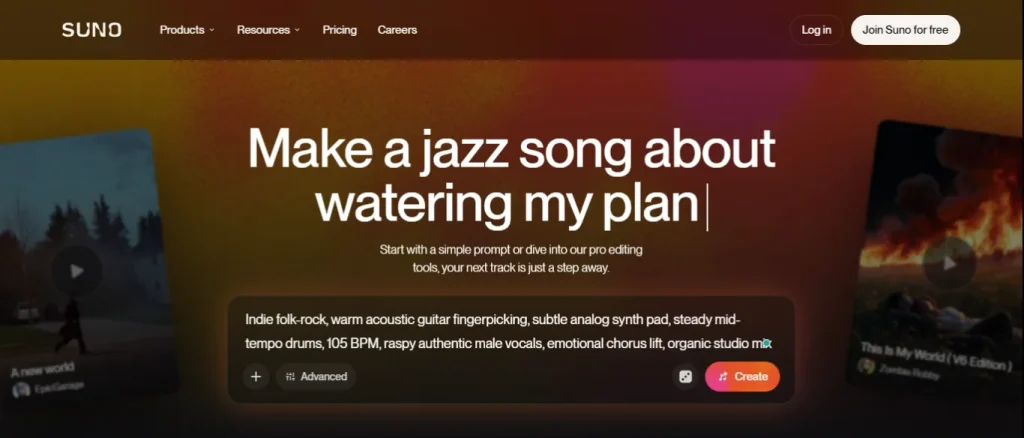
With its latest model updates, Suno solved the biggest giveaway of synthetic music: robotic breathing and flat chorus transitions. During my studio testing, I fed it a custom four-verse folk-rock lyric sheet with specific tempo cues. Not only did it nail the acoustic guitar fingerpicking, but the virtual vocalist actually shifted tone and intensity during the bridge.
- What Works: The Extend and Replace Section features let you fix a mispronounced word or a weak guitar solo without regenerating the entire track from scratch.
- The Catch: High-frequency cymbals and dense rock mixes still suffer from occasional metallic artifacts when pushed past three minutes.
- Best For: Songwriters, ad jingles, and video creators needing complete vocal tracks quickly.
2. Udio – Best for Audiophiles
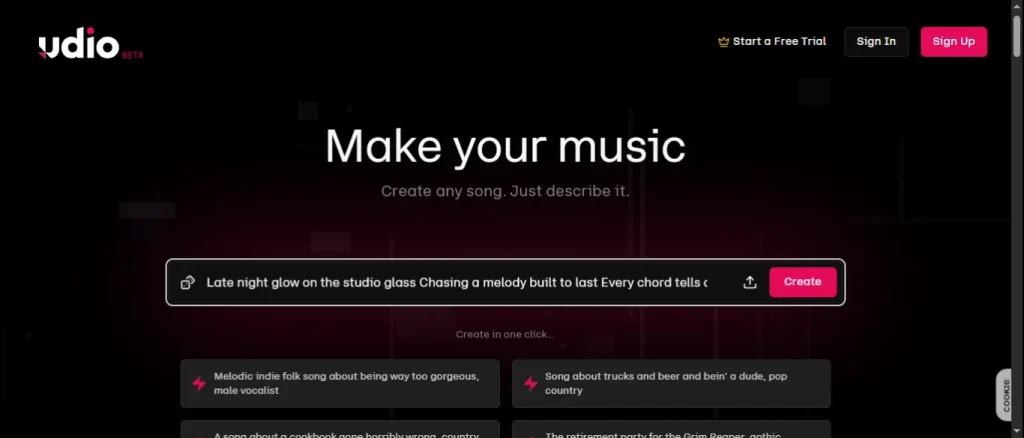
If Suno is built for speed, Udio is built for producers who want complete control. Instead of generating a three-minute track in one click, Udio encourages you to build songs in 32-second blocks. You can sculpt the intro, build the verse, drop the chorus, and craft an outro independently.
- What Works: Its grasp of niche genres, such as 1990s East Coast boom-bap, Midwest emo, and progressive house, is noticeably sharper than competitors. Its inpainting tool also lets you highlight a two-second vocal slip and rewrite just that specific phrase.
- The Catch: The workflow takes real patience. Getting a cohesive four-minute arrangement requires careful prompt trimming and close attention to song structure.
- Best For: Music producers and remixers who want granular control over every transition.
3. Soundraw – Best for Copyright-Safe YouTube
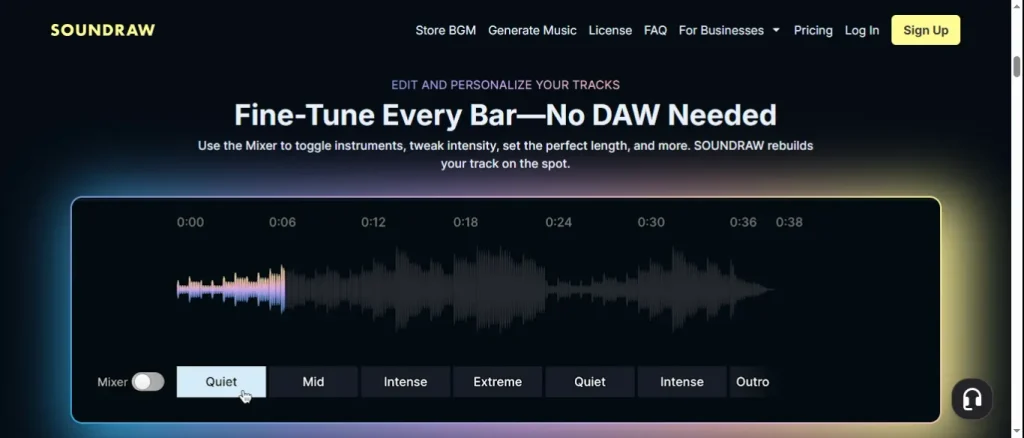
For US marketing agencies and monetized YouTube channels, copyright strikes are a serious financial risk. Unlike models trained on scraped internet audio, Soundraw builds its tracks using an in-house library of stems recorded by human studio musicians, layered together by its proprietary engine.
- What Works: Instead of guessing text prompts, you get a visual timeline where you can toggle the energy level (low, medium, high, or epic) for every 15-second block of your video.
- The Catch: It is strictly instrumental. If you need lead vocals or custom lyrics, you will need to pair it with another platform.
- Best For: Video editors, YouTubers, and commercial agencies needing zero-risk background music.
4. AIVA – Best for Film Scores and Games
Short for Artificial Intelligence Virtual Artist, AIVA has been a staple in cinematic composition long before generative audio went mainstream. Rather than guessing raw audio waveforms, AIVA composes actual musical notation.
- What Works: You can export full MIDI files directly into Logic Pro, Ableton, or Cubase. That means you can swap out AIVA’s stock strings for your own Spitfire Audio orchestral libraries and tweak individual cello notes by hand.
- The Catch: Its pop and electronic presets feel dated compared to Udio or Suno. Stick to cinematic, ambient, and classical styles.
- Best For: Indie game developers, film composers, and DAW producers who rely on MIDI workflows.
5. Beatoven.ai – Best for Podcasters and Story-Driven Video
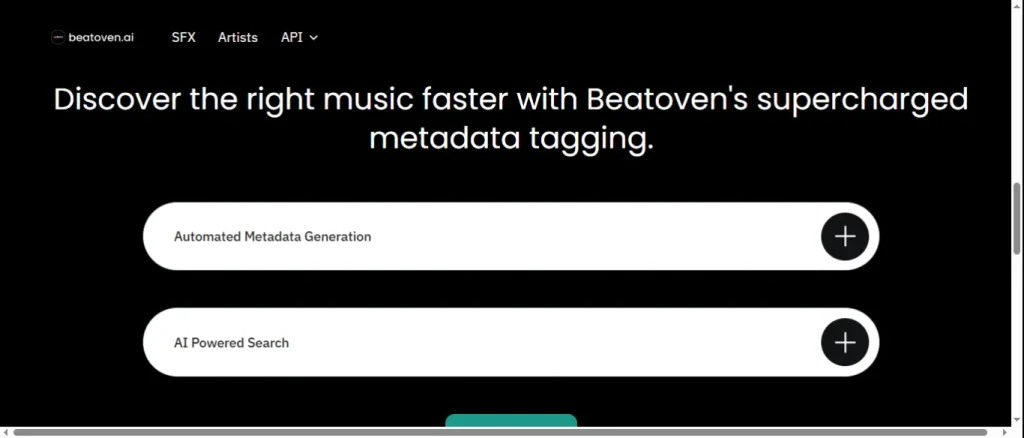
Beatoven.ai approaches music from a video editor’s perspective. You upload your rough video cut directly into the browser, mark the timestamps where the mood shifts (such as moving from a tense interview question to an inspiring resolution), and the engine scores around your spoken dialogue.
- What Works: Automatic ducking and frequency balancing keep instruments out of the human vocal range (1kHz to 4kHz), so your background music never clashes with a voiceover.
- The Catch: Track variety is narrower than open-ended prompt generators, leaning heavily toward corporate, documentary, and lo-fi styles.
- Best For: Podcasters, documentary filmmakers, and corporate video teams.
6. Loudly – Best for Fast Electronic Beats and Social Content
Loudly combines a massive catalog of pre-cleared audio loops with a generative engine tuned specifically for modern electronic, trap, reggaeton, and synthwave production.
- What Works: You can blend two genres (for example, 80% Cyberpunk and 20% Lo-Fi Hip Hop) and adjust instrument density sliders for drums, bass, and synths in real time before exporting stems.
- The Catch: Melodic complexity feels repetitive over longer runtimes. It performs best in 30-to-60-second social clips.
- Best For: TikTok and Reels creators, fitness apps, and streetwear brand promos.
7. Boomy – Best for Rapid Streaming Distribution
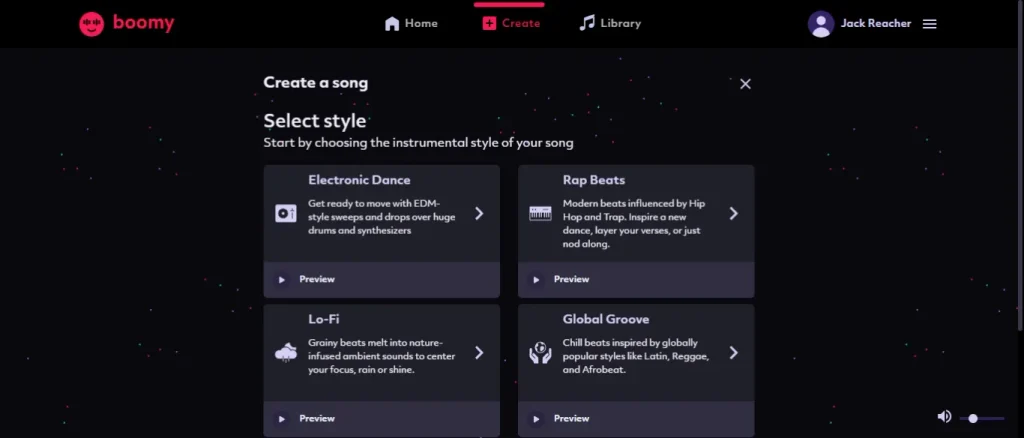
Boomy is less of a precision studio tool and more of an automated release pipeline. You pick a musical style, tweak basic mixing presets, and Boomy lets you submit the finished track directly to Spotify, Apple Music, and TikTok with a few clicks.
- What Works: It offers the fastest path from a rough beat idea to an active ISRC code on major streaming platforms.
- The Catch: Creative customization is heavily restricted, and Spotify has tightened its spam policies against low-effort automated uploads. Generic tracks face strict moderation.
- Best For: Beginners experimenting with music distribution and ambient playlisting.
3 Essential Rules Before Publishing an AI Song in the US
Before dropping an AI-generated track into a monetized video or client campaign, follow these three practical production habits:
- Always Download Multitrack Stems: AI mixes frequently suffer from muddy sub-bass and harsh vocal sibilance. Export the separate vocal, drum, bass, and melody .wav files, pull them into your DAW, and apply basic EQ and compression.
- Never Use Free-Tier Tracks for Client Work: Almost every platform, including Suno and Udio, retains full ownership of tracks generated on free accounts. You must be on an active paid subscription at the time of generation to claim commercial rights.
- Understand US Copyright Limits: The US Copyright Office maintains that raw output from a text prompt cannot be registered for copyright protection. If you want legal ownership of a song, write your own lyrics, record live instruments over the stems, or substantially rearrange the composition yourself.
Frequently Asked Questions (FAQs)
Can I monetize AI-generated songs on YouTube in 2026? Yes, provided you generated the track under a paid commercial plan and follow YouTube’s synthetic content disclosure guidelines when using realistic AI vocals. Platforms like Soundraw and Beatoven.ai also offer extra protection against false Content ID claims.
Which AI song generator has the most realistic human voice? In side-by-side studio testing, Suno and Udio lead the market for vocal realism, breath control, and emotional inflection. Suno excels at pop, country, and acoustic vocals, while Udio handles rock, rap, and soul nuances slightly better.
Do I own the copyright to songs I make with AI? Under current US law, you own the commercial license granted by the platform’s Terms of Service, meaning you can sell the track or use it in ads. However, you cannot legally copyright purely machine-generated audio unless a human contributes substantial original authorship, such as writing the lyrics or performing lead instruments.
Final Thoughts
Choosing the right AI song generator depends entirely on your workflow. If you want realistic vocals and full-song arrangements in minutes, Suno and Udio are your strongest picks. If you need copyright-safe instrumental tracks for monetized YouTube videos or client ads, go with Soundraw or Beatoven.ai.
Whichever tool you choose, always export your multitrack stems, polish the mix in your DAW, and make sure you are on an active paid plan before publishing any track commercially.